Hydrogen Water and Kidney Health: Potential Benefits
Your kidneys do a remarkable job every day — filtering roughly 200 liters of blood and removing toxins, balancing fluids, and regulating blood pressure. Yet oxidative stress and chronic inflammation quietly threaten this vital function in millions of people worldwide.
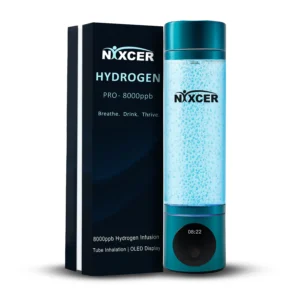
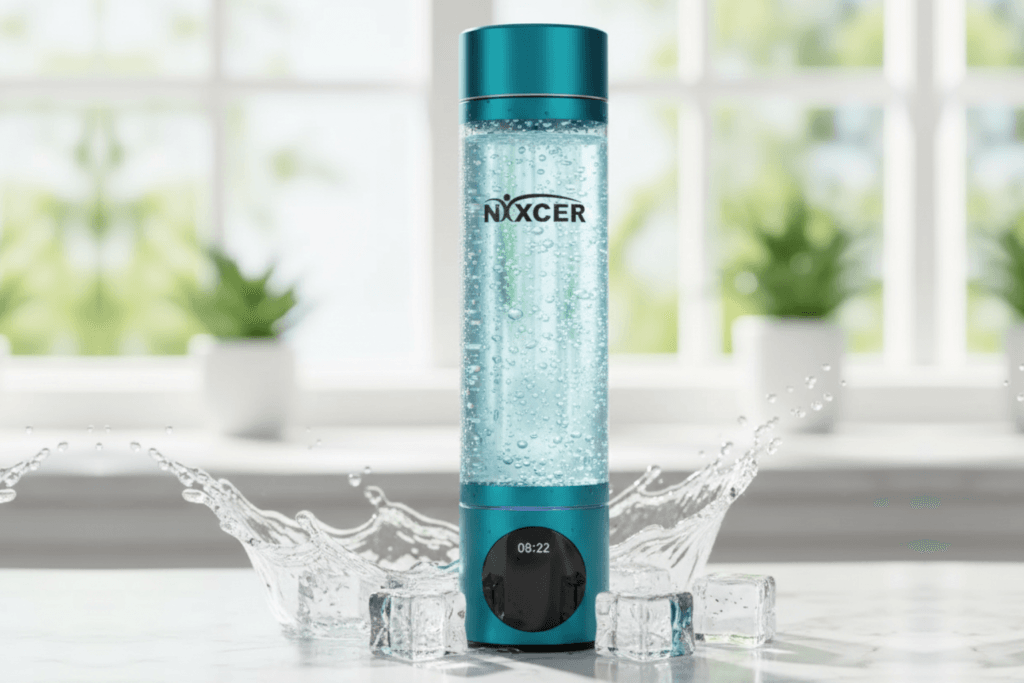
Hydrogen water — regular water infused with molecular hydrogen gas (H2) — has attracted growing scientific interest as a simple, natural way to support kidney health through targeted antioxidant action. And with devices like the Nixcer Pro Hydrogen Water Bottle now capable of producing up to 8,000 PPB (parts per billion) of dissolved hydrogen, getting therapeutic concentrations at home has never been more practical.
This guide covers everything you need to know: what the research actually says, who may benefit, how to use hydrogen water safely, and how to choose the best hydrogen water bottle for your kidney wellness goals.
What Is Hydrogen Water?
Hydrogen water is ordinary water that has been infused with additional dissolved molecular hydrogen gas (H2). Unlike alkaline water, which focuses on pH levels, hydrogen water’s proposed benefits come specifically from the H2 molecule itself.
Molecular hydrogen is the smallest molecule in existence. This tiny size lets it cross cell membranes and even penetrate the blood-brain barrier — something larger antioxidants like Vitamin C cannot do as easily. H2 acts as a selective antioxidant, targeting only the most harmful free radicals (hydroxyl radicals and peroxynitrite) without disrupting healthy biological processes.
Property
Hydrogen Water
Alkaline Water
Regular Water
Main Active Agent
Dissolved H2 gas
Elevated pH
None
Antioxidant Action
Yes — selective
Weak / indirect
No
Cell Penetration
Very high (tiny molecule)
Low
Moderate
Kidney Research
Growing (50+ studies)
Very limited
N/A
PPB/PPM Range
500–8,000 PPB
N/A
N/A
How the Kidneys Work — and Why They Need Protection
The kidneys are two bean-shaped organs that perform several critical functions:
Filter waste products and excess minerals from the blood
Regulate blood pressure through fluid and sodium balance
Produce hormones like erythropoietin (red blood cell production)
Maintain the body’s acid-base balance
The kidneys are highly metabolically active, which makes them especially vulnerable to oxidative stress — an imbalance between harmful free radicals and the body’s ability to neutralize them. When oxidative stress becomes chronic, it damages kidney cells, promotes inflammation, and can accelerate the progression of:
Chronic Kidney Disease (CKD) — affecting 10% of the global population
Acute Kidney Injury (AKI) — a sudden and dangerous drop in kidney function
Renal fibrosis — scarring of kidney tissue over time
Dialysis-related complications — oxidative damage during hemodialysis
This is where hydrogen water enters the conversation. Because H2 molecules are so small and targeted, they may be uniquely suited to combat the type of oxidative damage that the kidneys face.
How Does Hydrogen Water Affect the Kidneys?
The Core Mechanism: Selective Antioxidant Action
When you drink hydrogen-rich water, dissolved H2 molecules absorb into your bloodstream and are carried to tissues throughout the body — including the kidneys. Inside kidney cells, H2 selectively reacts with and neutralizes the most destructive free radicals, specifically hydroxyl radicals (•OH) and peroxynitrite (ONOO⁻).
What makes this remarkable is selectivity. Unlike broad-spectrum antioxidants that can interfere with normal biological signaling, H2 targets only cytotoxic radicals — the ones that cause DNA damage, cell death, and organ dysfunction. This property was first described in a landmark 2007 study published in Nature Medicine (Ohsawa et al.), which remains one of the most cited papers in hydrogen research.
Three Primary Pathways Relevant to Kidney Health
Pathway
What It Does
Kidney Relevance
Antioxidant (ROS Neutralization)
H2 neutralizes hydroxyl radicals and peroxynitrite
Reduces oxidative damage to kidney cells and tubules
Anti-Inflammatory (NF-κB Pathway)
Suppresses pro-inflammatory cytokines like TNF-α and IL-1β
Reduces renal inflammation; slows CKD progression
Anti-Apoptotic (Cell Survival)
Prevents programmed cell death in kidney tissue
Protects against AKI and ischemia-reperfusion injury
These three mechanisms work together to create a protective environment in the kidneys — reducing both the immediate damage from injury and the long-term wear from chronic disease.
Key Potential Benefits of Hydrogen Water for Kidney Health
1. May Reduce Oxidative Stress in CKD Patients
Chronic kidney disease is closely linked to elevated oxidative stress. As kidney function declines, the body accumulates reactive oxygen species (ROS), creating a harmful cycle that accelerates kidney damage. A 2024 cross-sectional study published in Antioxidants found that healthy adults who regularly consumed electrolyzed hydrogen water had significantly lower blood levels of reactive oxygen metabolites and blood urea nitrogen (BUN) — a key kidney function marker — compared to matched controls.
2. May Improve Outcomes in Dialysis Patients
Some of the strongest human evidence for hydrogen water and kidneys comes from hemodialysis patients. Studies have shown that using hydrogen-enriched dialysis solutions or hydrogen-rich water:
Reduced oxidative stress markers during and after dialysis sessions
Decreased fatigue — a major quality-of-life issue in dialysis patients
Improved blood urea nitrogen (BUN) and overall renal function parameters
May suppress progression of CAN (chronic allograft nephropathy) in transplant patients
Note: Dialysis patients have strict fluid restrictions. Any hydrogen water consumption must be discussed with the dialysis care team before starting.
3. May Protect Against Acute Kidney Injury (AKI)
AKI from causes like drug toxicity, ischemia-reperfusion injury, or surgery is a major medical challenge. Animal studies have consistently shown that hydrogen water or hydrogen-rich saline can:
Reduce cisplatin-induced kidney damage (common in cancer treatment)
Protect kidney tissue from ischemia-reperfusion injury (blood flow disruption)
Lower inflammatory markers like TNF-alpha and IL-1β
Reduce apoptotic (cell death) pathways in injured kidney tissue
While these studies are primarily animal-based, the mechanisms are consistent and point toward real protective potential that human trials are beginning to confirm.
4. May Slow Renal Fibrosis
Renal fibrosis — the scarring of kidney tissue — affects an estimated 10% of the global population and nearly half of adults over 70. Early research suggests that molecular hydrogen may help suppress fibrotic signaling pathways, offering a potential tool in slowing this otherwise irreversible process.
5. Supports Better Microcirculation
Some evidence suggests hydrogen water may improve microcirculation — the delivery of oxygen and nutrients to kidney cells. Better microcirculation means better filtration capacity and improved waste removal, which is the core job of a healthy kidney.
Daily EHW consumers had lower oxidative stress and lower BUN vs. non-consumers
ScienceDirect, Antioxidants 2022
Animal (AKI Model)
HRW reduced inflammation markers, apoptosis, and oxidative damage in AKI rats
Medical Gas Research, 2024
Animal (CKD / Hypertension)
Hydrogen water suppressed CKD progression related to high blood pressure in rats
Mol Cell Biochem, 2014
Animal (Transplant)
HRW reduced severity of chronic allograft nephropathy; improved graft survival
PMC Review, 2022
Systematic Review (25 studies)
Encouraging results across kidney, liver, cardiovascular, and metabolic outcomes
Int J Mol Sci, 2024
Important Research Caveats
Current research is promising but still evolving. Key limitations include:
Many human studies are small (10–50 participants) and short-term (3–6 months)
Most definitive data comes from animal models, not large randomized human trials
Hydrogen concentrations and dosing protocols vary significantly across studies
Optimal therapeutic dose for kidney health has not been definitively established
🔬 Bottom Line on the Science
Hydrogen water shows real, mechanistically sound potential for kidney health — particularly for reducing oxidative stress and supporting dialysis patients. It is not a cure and should never replace prescribed medical treatment. View it as a supportive wellness choice backed by early but growing evidence.
Who Should Consider Hydrogen Water for Kidney Support?
Hydrogen Water May Be Appropriate For:
Adults with early-stage CKD looking for complementary antioxidant support
Dialysis patients (with doctor approval and fluid restriction compliance)
People with high oxidative stress markers on blood tests
Athletes who engage in intense exercise that stresses the kidneys
Health-conscious adults who want to proactively protect kidney function
Hydrogen Water May NOT Be Appropriate For:
Anyone replacing prescribed kidney medication with hydrogen water
Dialysis patients without prior discussion with their care team
People with doctor-prescribed fluid restrictions — all additional fluid must be accounted for
Anyone seeking a miracle cure — hydrogen water is a wellness tool, not a treatment
How to Use Hydrogen Water for Kidney Support
Recommended Usage Guidelines
Parameter
General Guidance
Daily Amount
200–500 ml per serving, 1–3 times daily
Hydrogen Concentration
Minimum 1,000–3,000 PPB for potential therapeutic effect
Timing
Consume within 10–15 minutes of generation (H2 dissipates over time)
Duration
Studies typically run 3–6 months; consistent daily use is key
Water Type
Filtered or purified water recommended for maximum H2 output
Dialysis Patients
Must stay within prescribed fluid limits — count hydrogen water as fluid intake
Pro Tip: Drink your hydrogen water immediately after generating it. Molecular hydrogen is a gas — it gradually escapes the water over time. The Nixcer Pro’s quick 5-minute and 10-minute cycles mean fresh, high-concentration hydrogen water is always minutes away.
How to Choose the Best Hydrogen Water Bottle for Kidney Health
Not all hydrogen water bottles are created equal. If you’re using hydrogen water with kidney health in mind, these are the features that matter most:
Buying Guide: Key Features to Look For
Feature
Why It Matters
What to Look For
H2 Concentration (PPB)
Higher concentration = more H2 available for antioxidant action
Minimum 1,000 PPB; best hydrogen water bottles reach 3,000–8,000 PPB
Technology (SPE/PEM)
PEM membranes produce pure hydrogen, separating ozone/chlorine byproducts
Look for SPE/PEM dual-chamber systems
Hydrogen Purity
Contaminated hydrogen (with ozone) can be harmful
99.99% pure H2 output is ideal
Generation Modes
Adjustable modes let you control concentration
At least 2 cycle modes (5 min standard / 10 min maximum)
Material Safety
You’ll use this daily — materials matter
BPA-free Tritan, CE and RoHS certified
Portability
Daily use requires portability — consistency drives results
Portable hydrogen water bottle with USB-C charging and 350–450 ml capacity
Battery Life
Sufficient cycles per charge for all-day use
1,200+ mAh; 10+ cycles per charge
Inhalation Option
Extra H2 delivery route; some users prefer inhalation
Included nasal tube is a significant bonus
Price & Warranty
Value and after-sales support
Compare cost-per-use vs. bottled HW options
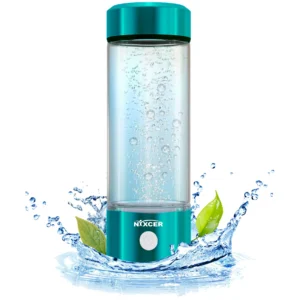
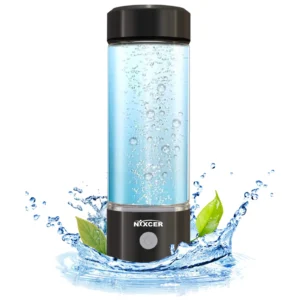
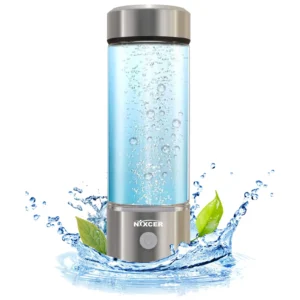
Why the Nixcer Pro Hydrogen Water Bottle Stands Out
1. Industry-Leading 8,000 PPB H2 Concentration
Most hydrogen water bottles on the market produce 1,000–3,000 PPB. The Nixcer Pro delivers up to 8,000 PPB — more than double the typical device. This matters because research consistently shows that higher H2 concentrations correlate with stronger antioxidant effects. Clinical studies used concentrations from 0.5 ppm to over 5 ppm; at 8 ppm, the Nixcer Pro exceeds even the highest research benchmarks.
2. Advanced SPE/PEM Dual-Chamber Technology
The Nixcer Pro uses a platinum-coated SPE/PEM dual-chamber electrolysis system. This design separates the hydrogen gas from oxygen and ozone byproducts — venting them safely before they reach your water. The result is 99.99% pure molecular hydrogen with no contamination. This is the same technology used in professional-grade hydrogen water generators, now in a portable hydrogen water bottle format.
3. Dual Operating Modes for Flexible Dosing
The Nixcer Pro offers two modes:
Mode 1 (5 minutes): Produces 4,000 PPB — ideal for daily maintenance and quick hydration
Mode 2 (10 minutes): Produces 8,000 PPB — maximum concentration for higher-intensity sessions or those seeking stronger antioxidant support
This flexibility lets users customize their hydrogen intake based on time constraints and personal wellness goals — a feature absent in most competing hydrogen water generator bottles.
4. Dual-Delivery: Drink + Hydrogen Inhalation
The Nixcer Pro is one of the few portable hydrogen water bottles that includes an optional nasal inhalation tube. Inhalation delivers H2 directly into the respiratory system — a faster route to systemic antioxidant effects. For kidney health applications where systemic H2 distribution matters, having both delivery methods in one device adds meaningful versatility.
5. Premium Build Quality and Safety Certifications
BPA-free Tritan™ construction — food-safe, durable, and scratch-resistant
CE and RoHS certified — independently verified for consumer safety
Leak-proof 360° lid — safe in a bag, gym kit, or car cup holder
1600 mAh C to C battery — 13 cycles per charge; 2-hour full recharge
6. Excellent Value and Accessibility
At $89.99 (or $65.79 on Amazon), the Nixcer Pro delivers premium hydrogen generator technology at a fraction of the cost of countertop ionizers — which can run $1,000–$4,000. Using promo code Nixcer26 takes an additional 26% off the website price. With free USA shipping and expanding international availability (UK, Canada, Australia, Singapore), it is genuinely accessible to a global wellness audience.
Nixcer Pro vs. Other Hydrogen Water Options — Full Comparison
Feature
Nixcer Pro
Generic HW Bottles
HW Tablets
Countertop Ionizer
Max H2 Concentration
8,000 PPB ✅
1,000–3,000 PPB
1,000–1,500 PPB
1,300–1,600 PPB
Technology
SPE/PEM Platinum ✅
Basic electrolysis
Magnesium reaction
Electrolysis
H2 Purity
99.99% ✅
Varies
Mixed
Good
Inhalation Mode
Yes ✅
Rarely
No
Some models
Portability
Fully portable ✅
Portable
Portable
Counter-only ❌
Battery Life
13 cycles ✅
5–8 cycles
N/A
Plugged in
BPA-Free + Certified
CE + RoHS ✅
Often unclear
N/A
Varies
Price Range
$66–$90 ✅
$30–$80
$20–$40 / pack
$800–$4,000 ❌
Free USA Shipping
Yes ✅
Varies
Yes
Varies
Pros and Cons of Hydrogen Water for Kidney Health
Pros
Growing scientific evidence for antioxidant and anti-inflammatory effects
Mechanistically sound — H2’s small size enables deep cellular penetration
Very safe — no significant adverse effects reported in studies
Convenient and non-invasive — just drink your water
Multiple delivery routes (drink, inhalation) via devices like the Nixcer Pro
Affordable long-term compared to supplement stacks
Cons
Still emerging science — most human trials are small and short-term
Not a replacement for medical treatment of CKD, AKI, or dialysis
H2 dissipates quickly — must be consumed shortly after generation
Dialysis patients must consult care teams due to fluid restrictions
Individual results vary significantly
Frequently Asked Questions (FAQs)
Is hydrogen water good for kidneys?
Based on current evidence, hydrogen water may support kidney health by reducing oxidative stress and inflammation — two primary drivers of kidney damage. Early clinical and animal studies show promising results, particularly for CKD and dialysis patients. However, hydrogen water is not a proven treatment; it’s best considered a complementary wellness practice alongside standard medical care.
What is the best hydrogen water bottle for kidney health?
The Nixcer Pro Hydrogen Water Bottle is our top recommendation. It delivers up to 8,000 PPB of pure molecular hydrogen using advanced SPE/PEM technology — the highest clinically relevant concentration in a portable hydrogen water bottle. It is CE and RoHS certified, BPA-free, and includes an optional inhalation mode. Shop it at nixcer.com or on Amazon with code Nixcer26 for 26% off.
How much hydrogen water should I drink for kidney support?
Research studies typically used 200–500 ml of hydrogen water 1–3 times daily. For kidney health specifically, an optimal dose has not been definitively established. Starting with one serving (300–350 ml) daily and increasing gradually is a reasonable approach. Always stay within any fluid restrictions prescribed by your doctor.
What hydrogen concentration is most effective for kidneys?
Clinical studies have used concentrations ranging from 0.5 ppm to over 5 ppm (500–5,000 PPB). Experts generally suggest targeting at least 1–3 ppm for potential antioxidant effects. The Nixcer Pro’s 8,000 PPB output exceeds these benchmarks, giving users access to the highest concentrations available in a consumer hydrogen water generator bottle.
Is hydrogen water safe for dialysis patients?
Studies on dialysis patients using hydrogen-enriched solutions have shown a good safety profile, with benefits including reduced oxidative stress and fatigue. However, dialysis patients must follow strict fluid restrictions and should always consult their dialysis care team before adding any additional fluid — including hydrogen water — to their daily intake.
What is the difference between hydrogen water and alkaline water?
Hydrogen water contains dissolved molecular hydrogen gas (H2), which acts as a selective antioxidant. Alkaline water simply has a higher pH. The proposed mechanisms are entirely different, and current research suggests stronger evidence for hydrogen water in kidney-specific outcomes. Some hydrogen water is also alkaline, but the benefits come from the H2 molecule, not the pH.
How does the Nixcer Pro hydrogen water bottle work?
The Nixcer Pro uses electrolysis to split water molecules. A platinum-coated SPE/PEM membrane infuses H2 gas into the water while safely venting oxygen and ozone into a separate chamber. In Mode 1 (5 min), it produces 4,000 PPB; in Mode 2 (10 min), up to 8,000 PPB. One button operation, 1600 mAh USB-C battery, and a leak-proof design make it easy for daily use anywhere.
Does hydrogen water really work for kidney health?
The science is real but still developing. Mechanistically, molecular hydrogen’s selective antioxidant and anti-inflammatory properties are well established. Clinical data — particularly for dialysis patients and CKD markers like BUN — is encouraging. Larger, longer-term randomized trials are needed. Current evidence supports hydrogen water as a safe, promising wellness tool but not as a standalone medical treatment.
Final Verdict: Is Hydrogen Water Worth It for Kidney Health?
Hydrogen water occupies a genuinely exciting space in kidney health research. Unlike many wellness trends with no scientific foundation, H2 has a mechanistically sound basis — its selective antioxidant properties are well-documented, and growing clinical evidence (especially in dialysis patients and CKD research) supports its potential as a complementary tool for renal wellness.
If you decide to explore hydrogen water for kidney support, choosing the right device matters enormously. A low-quality bottle producing 500–1,000 PPB is unlikely to deliver meaningful antioxidant effects. The Nixcer Pro Hydrogen Water Bottle — with its 8,000 PPB maximum output, dual SPE/PEM technology, optional inhalation mode, and CE/RoHS safety certification — represents the current gold standard in portable hydrogen water generation.