Do Water Filters Remove Bacteria? The Complete Guide
Yes — but only certain types of water filters remove bacteria. Reverse osmosis (RO), ultrafiltration (UF), and UV purifiers are the most effective at removing or killing bacteria. Standard carbon filters and most pitcher filters do NOT reliably remove bacteria. Once your water is clean and bacteria-free, upgrading to a hydrogen water generator bottle like the Nixcer Pro adds powerful antioxidant benefits to every sip.
What Is Bacteria in Water?
Bacteria are microscopic, single-celled organisms found almost everywhere in nature — including water. Most bacteria in water are harmless or even beneficial. But some species, called pathogens, can make you seriously sick.
The most common harmful bacteria found in drinking water include:
E. coli (Escherichia coli) — Found in fecally contaminated water; causes severe diarrhea and cramps
Salmonella — Causes salmonellosis; symptoms include fever, diarrhea, and vomiting
Campylobacter — The most common cause of bacterial diarrhea in the U.S., affecting nearly 1% of the population per year
Legionella — Causes Legionnaires’ disease, a serious form of pneumonia
Total Coliform — An indicator group; their presence signals possible contamination from fecal matter
According to the CDC, approximately 7.2 million Americans suffer from waterborne illnesses annually. While municipal water treatment handles most of this risk, private wells and aging infrastructure can still allow bacteria to reach your tap.
Do Water Filters Remove Bacteria? (Direct Answer)
Yes — some water filters remove bacteria very effectively. But not all filters do.
This is the most important thing to understand: the phrase “water filter” covers a huge range of devices with very different capabilities. A basic fridge filter or pitcher filter is designed to improve taste — not eliminate bacteria. A reverse osmosis system or UV purifier, on the other hand, can remove or kill nearly all harmful bacteria.
Whether a filter removes bacteria depends on:
The filter’s pore size (smaller = more effective at trapping bacteria)
The filtration technology (mechanical, chemical, UV, or a combination)
Whether it kills or just traps bacteria
How well it’s maintained (old filters can actually breed bacteria)
The bottom line: test your water first, then choose a filter certified for the specific threat in your supply.
Types of Water Filters and Their Bacteria Removal Ability
Not all filters work the same way. Here’s a clear breakdown of the most common types and how they handle bacteria:
1. Activated Carbon Filters (Most Common)
Carbon filters — used in Brita, PUR, Zero Water, and most pitcher filters — work by adsorption. Water passes through porous carbon material, and chemicals, chlorine, and some heavy metals stick to the surface.
Bacteria removal: ❌ Generally NOT effective
Carbon filters are not designed to trap bacteria. Their pores are too large to physically block bacteria, and they don’t kill them either. In fact, studies have shown that improperly maintained carbon filters can become breeding grounds for bacteria — with some filtered samples containing up to 10,000 times more bacteria than the tap water before filtering (PubMed, 1998).
Use carbon filters to: Improve taste, remove chlorine, reduce VOCs, reduce lead. Do NOT rely on them for: Bacteria, viruses, parasites.
2. Reverse Osmosis (RO) Filters
Reverse osmosis forces water through a semi-permeable membrane with pores as small as 0.0001 microns. Bacteria typically measure 0.2–2 microns in size — far too large to pass through.
Bacteria removal: ✅ Very effective (>99.9%)
RO systems can block bacteria like E. coli and Salmonella reliably. They also reduce heavy metals, nitrates, fluoride, arsenic, and dissolved solids. The key limitation: RO doesn’t kill bacteria — it only blocks them. If the membrane is damaged or if bacteria grow inside the system due to poor maintenance, contamination is still possible.
Best for: Well water users, households with lead or heavy metal concerns, comprehensive water purification.
3. UV (Ultraviolet) Filters
UV filters don’t physically remove bacteria — they destroy them. Water passes through a chamber where UV-C light (at a specific wavelength) disrupts the DNA of bacteria and viruses, preventing them from reproducing.
Bacteria removal: ✅ Highly effective (up to 99.99%)
UV systems can eliminate nearly all bacteria, viruses, mold, and protozoa. Culligan and SpringWell offer whole-house UV systems certified to NSF Standard 55. The limitation: UV only works on microorganisms — it doesn’t remove chemicals, heavy metals, or sediment. For complete protection, UV is best combined with RO or carbon filtration.
Best for: Well water users, households needing biological protection without chemical changes to water.
4. Ultrafiltration (UF) Filters
UF systems use hollow fiber membranes with pore sizes between 0.01–0.1 microns — small enough to block bacteria, cysts, and some viruses. Unlike RO, UF retains beneficial minerals in the water.
Bacteria removal: ✅ Very effective (>99.9%)
UF is increasingly popular because it provides strong biological protection while being easier to install than RO. TAPP Water’s Ultra filter, for example, is certified for 99.95% bacteria removal independently tested in multiple countries.
Best for: People who want bacteria protection while keeping mineral content intact.
5. Pitcher Filters (Brita, PUR, zero Water, etc.)
Pitcher filters are the most widely used home filtration products. Most use granular activated carbon (GAC).
Bacteria removal: ❌ Not effective
Brita, PUR, zero Water, and most other standard pitchers make no claim about bacteria removal. They are designed for taste, odor, and chemical reduction only. If your primary concern is bacteria, a pitcher filter is not the right tool.
Exception: Some pitchers with hollow fiber membranes (like certain LifeStraw pitcher models) do filter bacteria. Check the label for NSF certification.
What Bacteria Do Water Filters NOT Remove?
Even the best filtration systems have limits. Important points:
No filter is certified to remove Campylobacter or Salmonella in all scenarios — contact your local water authority if your water tests positive for these and consider boiling
Viruses are different from bacteria — they are smaller (0.02–0.25 microns) and require RO or UV specifically
Carbon filters and pitcher filters cannot reliably remove any pathogenic bacteria
Old, unmaintained filters can harbor more bacteria than unfiltered tap water — filter maintenance is critical
If your water source has confirmed bacterial contamination, the CDC recommends boiling as the most universally reliable emergency treatment while you arrange a certified filtration solution.
NSF Certifications: What They Mean for Bacteria
When shopping for a water filter, look for NSF/ANSI certification. These independent standards confirm what a filter actually removes, not just what marketing claims.
Pro tip: A filter claiming to “remove bacteria” without an NSF certification number is a marketing claim, not a verified fact. Always check the filter’s NSF certification page at nsf.org before purchasing.
Well Water vs. Municipal Water: Different Risks
Your water source determines how seriously you need to think about bacteria:
Municipal (Tap) Water: Most city water is treated with chlorine and goes through multi-stage processing before reaching your tap. Bacteria rarely make it through in normal conditions. However, aging pipes, system breaks, and boil water advisories show this isn’t foolproof. A carbon filter is often sufficient for taste improvement. If bacteria are a concern, a UV or RO stage adds a reliable safety net.
Well Water: Private wells are not subject to federal water quality regulations. They rely on the owner for testing and maintenance. The CDC recommends testing well water at least annually for total coliform bacteria. Because well water is more likely to contain biological contaminants from surface runoff, flooding, and nearby agricultural land, well water users typically need a UV system or UF filter for bacterial protection.
After Bacteria Is Gone: What About Water Quality?
Here’s something most water filter guides skip entirely:
Removing bacteria makes water safe. But it doesn’t make water optimized.
Treated water — especially reverse osmosis water — is very pure but essentially “empty.” It has no added health benefit beyond being clean. Many health-conscious people are now asking a different question: What can I add to my water to actively support my health?
This is where hydrogen water enters the picture.
Hydrogen Water: The Next Step Beyond Filtration
Once you’ve handled bacteria with a proper filtration system, hydrogen-enriched water represents the most researched emerging upgrade in daily hydration.
What is hydrogen water? Hydrogen water is regular filtered water that has been infused with dissolved molecular hydrogen (H₂) through a process called electrolysis. These H₂ molecules are the smallest in existence — they pass easily through cell membranes and mitochondria.
Why does that matter? Research suggests that molecular hydrogen acts as a selective antioxidant, targeting the most harmful type of free radicals (hydroxyl radicals) while leaving beneficial reactive oxygen species intact. This means hydrogen water may help:
Reduce oxidative stress and cellular inflammation
Support faster recovery after physical activity
Improve energy levels and cognitive function
Promote anti-aging at the cellular level
Enhance overall hydration efficiency
Important note: Hydrogen water is not a medical treatment. Research is ongoing, and individual results vary. It is not a substitute for filtration — hydrogen generators do not remove bacteria or contaminants. You should always start with clean, pre-filtered water.
Nixcer Pro Hydrogen Water Bottle:
The Best Hydrogen Water Generator for Clean Water Users
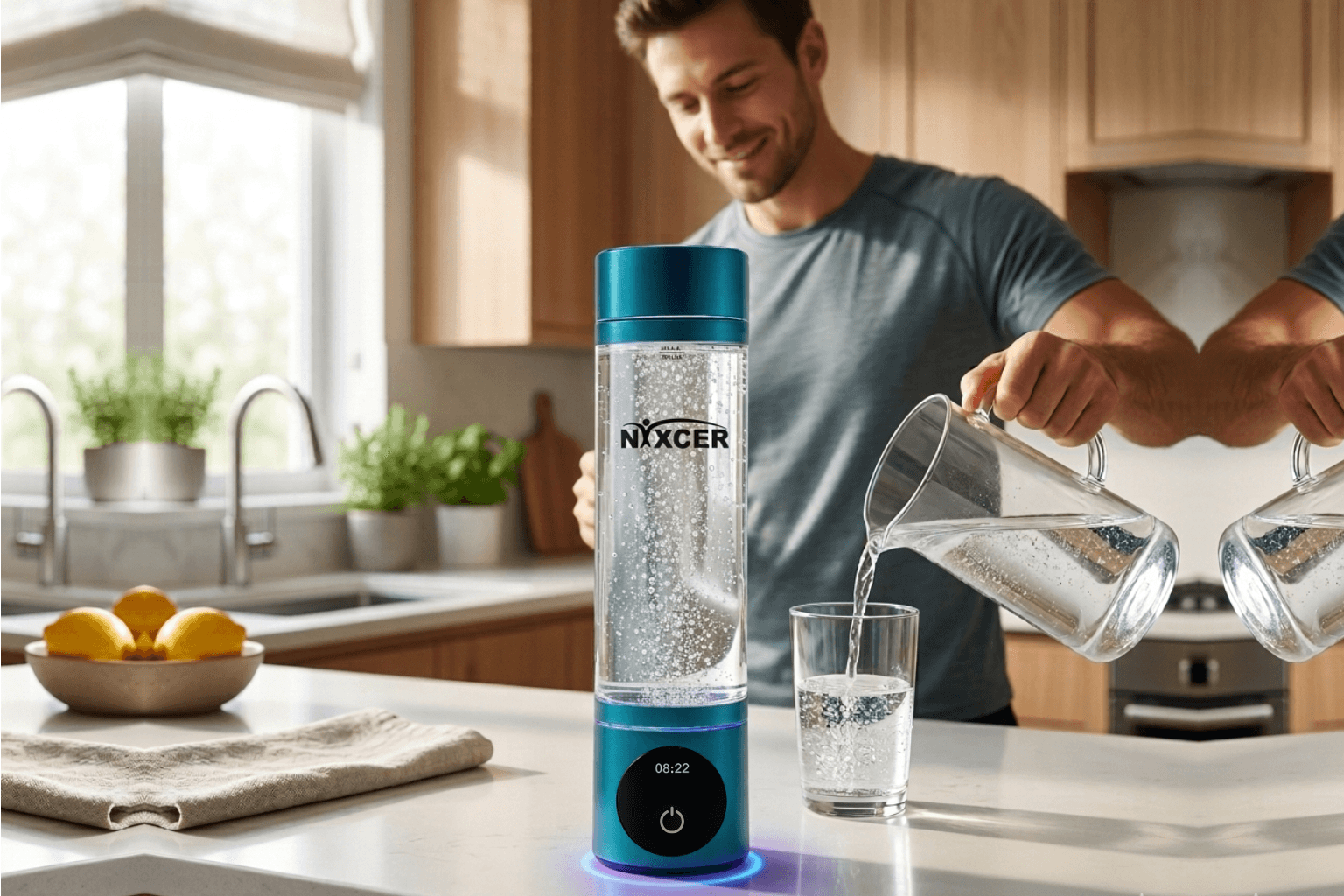
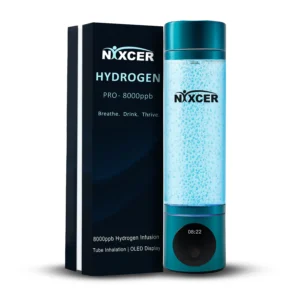
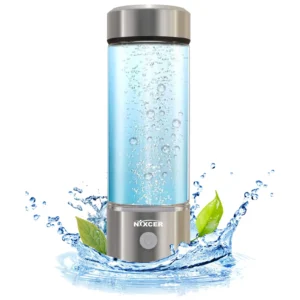
If you’re already using filtered or purified water and want to take your hydration to the next level, the Nixcer Pro Hydrogen Water Bottle is the most powerful portable hydrogen water bottle available in 2025.
The Nixcer brand has built a reputation as a premium hydrogen water generator bottle designed for real performance — not just marketing claims.
What Makes the Nixcer Pro Stand Out
Feature
Nixcer Pro
Standard Hydrogen Bottles
Max Hydrogen Output
8,000 PPB
1,000–3,000 PPB
Technology
Platinum SPE/PEM Dual Chamber
Basic SPE or PEM
H2 Purity
99.99% pure
Varies (may include ozone)
Modes
5-min (4,000 PPB) / 10-min (8,000 PPB)
Single mode only
Battery
1,600 mAh C to C type
500–1,000 mAh
Extra Function
Drink + Nasal Inhalation
Drink only
Safety Certifications
CE & RoHS
Often none listed
Ozone/Chlorine Output
Zero
Risk in cheap models
The Nixcer Pro uses a platinum-coated SPE/PEM dual-chamber system that separates hydrogen and oxygen during electrolysis. Unwanted gases — including any residual chlorine or oxygen — are automatically vented out through a smart bottom vent. What remains is 99.99% pure hydrogen-rich water with no harmful byproducts.
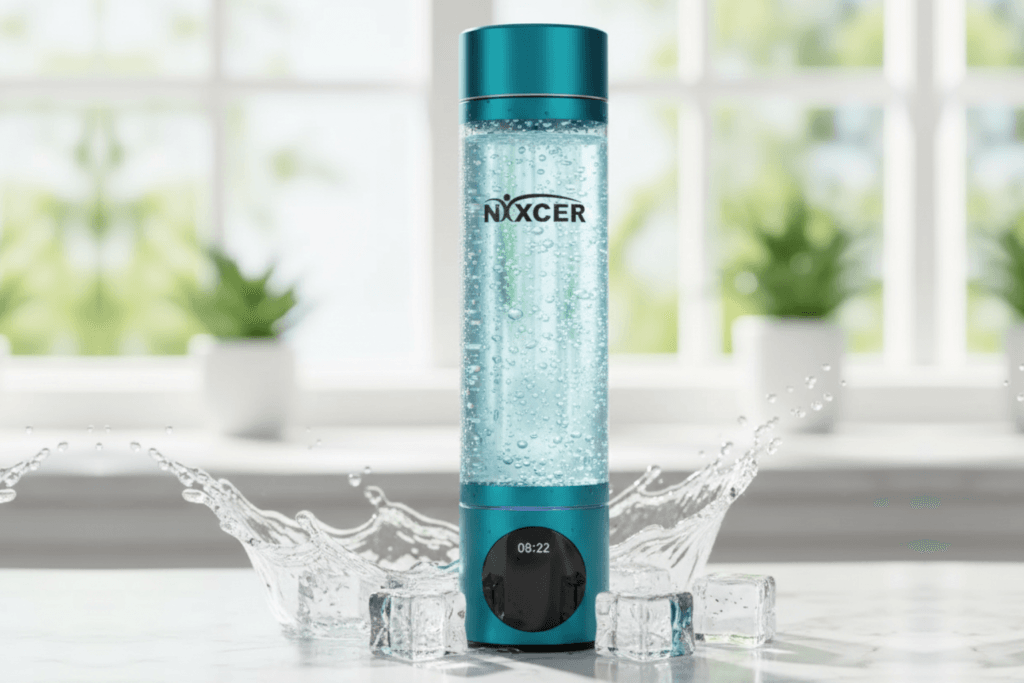
Its OLED display shows real-time mode selection and operational status, while a calming rainbow light activates during the hydrogen generation cycle.
Nixcer Pro Full Specs at a Glance
Hydrogen concentration: Up to 8,000 PPB (highest-class portable)
Modes: 5-minute (4,000 PPB) and 10-minute deep cycle (8,000 PPB)
Capacity: 350ml optimal fill line
Battery: 1,600 mAh → 7–13 cycles per charge; 2-hour C to C recharge
Material: BPA-Free Polycarbonate, food-grade safe
Certifications: CE certified, RoHS compliant
Dual use: Hydrogen drinking water + nasal H2 inhalation mode
Compatibility: Works with filtered water, purified water, tap water, RO water, distilled water
Who the Nixcer Pro Hydrogen Water Bottle Is For
✅ People who already drink filtered, purified, or RO water ✅ Athletes and gym-goers seeking faster recovery and reduced muscle fatigue ✅ Health-conscious individuals focused on reducing oxidative stress ✅ Frequent travelers who need a portable hydrogen water bottle that works anywhere ✅ Professionals with demanding schedules who want a daily wellness ritual ✅ People interested in the emerging science of molecular hydrogen ✅ Anyone looking for the best hydrogen water bottle at a premium level
Who It Is NOT For
❌ Anyone relying on it to filter bacteria or contaminants — it is not a water filter ❌ Those looking for a basic filtered water bottle — pair it with an existing filter ❌ People who won’t drink the water within 20–30 minutes of generation (hydrogen dissipates)
Comparison: Water Filter Types + Hydrogen Upgrade
Solution
Removes Bacteria
Improves Taste
Adds Antioxidants
Portable
Best For
Carbon/Pitcher Filter
❌ No
✅ Yes
❌ No
✅ Yes
Taste improvement
Reverse Osmosis
✅ Yes
✅ Yes
❌ No
❌ No
Full home purification
UV Purifier
✅ Yes
⚠️ Partial
❌ No
❌ No
Biological protection
Ultrafiltration
✅ Yes
✅ Yes
❌ No
⚠️ Partial
Balanced purification
Nixcer Pro H2 Bottle
❌ No*
✅ Yes
✅ Yes
✅ Yes
Wellness upgrade
*The Nixcer Pro is designed for use with already-clean water. It does not replace a water filter.
The ideal setup for most health-conscious households:
Install a quality RO, UF, or UV system at home for bacteria removal
Use the Nixcer Pro hydrogen water generator bottle to infuse your clean water with molecular hydrogen daily
Pros and Cons of Common Water Filtration Methods
Reverse Osmosis
Pros: Most comprehensive contamination removal; blocks bacteria, heavy metals, nitrates Cons: Wastes water (2–4 gallons per gallon filtered); removes minerals; requires installation; doesn’t kill bacteria (only blocks)
UV Filtration
Pros: Kills 99.99% of bacteria and viruses; no chemicals added; fast Cons: Doesn’t remove chemicals or sediment; needs electricity; requires clear water to work
Ultrafiltration
Pros: Removes bacteria and cysts; keeps minerals; no electricity needed; easy install Cons: Doesn’t remove dissolved chemicals, heavy metals, or viruses as effectively
Carbon/Pitcher Filters
Pros: Affordable; easy to use; great for taste and chlorine Cons: Does NOT remove bacteria; filters can harbor bacteria if not replaced on schedule
Nixcer Pro Hydrogen Water Bottle
Pros: 8,000 PPB hydrogen — highest portable class; dual drink/inhale modes; CE & RoHS certified; USB-C rechargeable; BPA-free; zero ozone output Cons: Not a water filter; requires pre-cleaned water; hydrogen dissipates within 20–30 min; ongoing research on full health benefits
Buying Guide: How to Choose the Right Water Solution
Follow this simple decision path:
Step 1: Know your water source
City/municipal water → Carbon filter for taste; add UV or RO if immune-compromised
Well water → Always use RO + UV or UF for biological protection; test annually
2: Test your water
Use an NSF-certified test kit or hire a lab
Identify specific contaminants (bacteria, heavy metals, nitrates, etc.)
3: Match the filter to the threat
Bacteria confirmed → RO, UV, or UF with NSF P231 or NSF 55 certification
Chemical concerns → RO or carbon block with NSF 53/58 certification
Taste/odor only → Carbon filter with NSF 42
4: Want to go further?
Once your water is clean, add the Nixcer Pro hydrogen water bottle as your daily antioxidant upgrade
5: Maintain your system
Replace filter cartridges on schedule — a neglected filter is worse than no filter
Test post-filter water annually
Quick Questions & Answers
Does a Brita filter remove bacteria?
No. Brita filters use activated carbon to improve taste and reduce chlorine, lead, and some chemicals. They are not designed or certified to remove bacteria. If bacteria in drinking water is your concern, you need a reverse osmosis, UV, or ultrafiltration system.
Does reverse osmosis remove all bacteria?
RO removes over 99.9% of bacteria by physically blocking them with its semi-permeable membrane. However, it doesn’t kill bacteria — if the membrane is damaged or the system is poorly maintained, bacteria can grow inside the unit. Regular maintenance and filter changes are essential.
What is the best water filter for bacteria removal?
For most households, an ultrafiltration (UF) faucet filter certified to NSF P231, or a reverse osmosis system with a UV stage, provides the strongest protection. Whole-house UV systems (like SpringWell or Culligan) are ideal for well water users.
What is hydrogen water, and does it remove bacteria?
Hydrogen water is regular filtered water infused with dissolved molecular hydrogen (H₂) using electrolysis. It does not remove bacteria. It is an antioxidant upgrade designed for use after your water has been properly filtered. Devices like the Nixcer Pro hydrogen water bottle are used with already-clean water to add potential wellness benefits.
How long does hydrogen stay in the water?
Hydrogen begins to dissipate immediately after generation. For maximum benefit, drink hydrogen water within 20–30 minutes of the generation cycle. The Nixcer Pro’s leak-proof 360° lid helps slow this dissipation when the bottle remains sealed.
Final Verdict
Water filters can remove bacteria, but only if you choose the right type. Standard carbon pitchers and fridge filters are not bacteria fighters — they improve taste and remove chemicals. For genuine bacterial protection, look for reverse osmosis, UV, or ultrafiltration systems certified to NSF P231 or NSF 55.
Once your water is clean and safe, the next frontier in water quality is molecular hydrogen. The Nixcer Pro Hydrogen Water Bottle is the most powerful portable hydrogen water bottle you can carry, delivering up to 8,000 PPB of pure H₂ per cycle with zero ozone or harmful byproducts. For athletes, health-conscious adults, and anyone who takes clean water seriously, the Nixcer Pro is the natural complement to your filtration system.