Budget-Friendly Hydrogen Water Bottles: Options Under $100
Staying hydrated is essential for health, but what if your water could do more? Hydrogen water bottles are transforming ordinary hydration into a wellness tool, and the good news is you don’t need to spend hundreds of dollars to experience the benefits. Quality hydrogen water bottles under $100 now offer impressive technology, reliable performance, and genuine health benefits that were once reserved for premium models.
This comprehensive guide explores the best budget-friendly hydrogen water bottles available today. We’ll break down the science, compare top options, and help you make an informed decision without breaking the bank. Whether you’re new to hydrogen water or looking to upgrade from a basic model, you’ll find everything you need to choose the perfect bottle for your lifestyle and budget.
What Are Hydrogen Water Bottles and Why Consider Budget Options?
Understanding Hydrogen Water Technology
Hydrogen water bottles are portable devices that infuse regular drinking water with molecular hydrogen (H₂) through a process called electrolysis. When you activate the bottle, an electrical current splits water molecules into hydrogen and oxygen gases. The hydrogen gas dissolves back into the water, creating hydrogen-rich water with potential antioxidant properties.
The technology isn’t new, but what has changed dramatically is accessibility. Advanced electrolysis systems that once required expensive equipment now fit in compact, affordable bottles. Modern budget hydrogen water bottles use the same SPE/PEM (Solid Polymer Electrolyte/Proton Exchange Membrane) technology found in premium models, making this wellness tool available to everyone.
The Rise of Affordable Hydrogen Water Bottles
Just a few years ago, quality hydrogen water bottles started at $200 or more. Today, competitive manufacturing and improved technology have driven prices down significantly. Budget bottles under $100 now routinely achieve hydrogen concentrations of 1,000-2,500 PPB (parts per billion), with some models like the Nixcer Pro reaching an impressive 8,000 PPB.
This price reduction doesn’t mean compromised quality. Many affordable options feature durable materials, long-lasting batteries, and reliable hydrogen production. The key difference between budget and premium models often comes down to additional features like larger capacities, premium materials, or advanced filtration rather than core hydrogen generation capability.
Who Should Consider Budget Hydrogen Water Bottles?
Budget hydrogen water bottles are ideal for several groups. If you’re curious about hydrogen water but hesitant to invest heavily, an under-$100 option lets you experiment without significant financial risk. Athletes and fitness enthusiasts seeking better post-workout recovery can benefit from affordable daily access to hydrogen-rich water. Busy professionals wanting convenient wellness support will appreciate the portability and ease of use. Families looking to upgrade their hydration routine can start with a budget-friendly model before committing to multiple bottles.
How Hydrogen Water Bottles Work: The Science Made Simple
Electrolysis Process Explained
At the heart of every hydrogen water bottle is electrolysis. When you press the activation button, electrical current flows through platinum or titanium electrodes submerged in water. This current causes water molecules (H₂O) to split into their component elements: hydrogen (H₂) and oxygen (O₂).
The process happens quickly, typically taking 3-10 minutes depending on the desired concentration. As the water separates, you’ll see tiny bubbles forming—these are hydrogen molecules being released. Quality bottles use a dual-chamber design that channels pure hydrogen back into the water while venting oxygen and any other gases separately. This separation ensures you get only beneficial molecular hydrogen in your drinking water.
SPE/PEM Technology: The Gold Standard
The Nixcer’s best hydrogen water bottles use SPE/PEM technology, considered the industry standard for safe, effective hydrogen production. The Solid Polymer Electrolyte provides a stable medium for electrolysis, while the Proton Exchange Membrane acts as a selective barrier.
This membrane is crucial—it allows only hydrogen ions to pass through while blocking contaminants and unwanted byproducts like ozone or chlorine. Without this technology, cheaper bottles might produce hydrogen alongside potentially harmful gases. SPE/PEM systems ensure pure hydrogen production, which is why this feature appears in both budget and premium bottles. When shopping, always verify that a bottle uses SPE/PEM technology for safety and effectiveness.
Hydrogen Concentration: What PPB and PPM Really Mean
Hydrogen concentration is measured in parts per billion (PPB) or parts per million (PPM). These units indicate how much molecular hydrogen has dissolved in the water. The conversion is simple: 1 PPM equals 1,000 PPB.
Research suggests that effective hydrogen concentrations for health benefits range from 500-1,600 PPB (0.5-1.6 PPM). Bottles producing 1,000+ PPB are generally considered reliable for therapeutic effects. Some budget models now reach 2,000-8,000 PPB, though it’s important to note that concentrations above 1,600 PPB may offer diminishing returns—your body can only absorb so much hydrogen, and excess amounts simply dissipate or are exhaled.
Health Benefits of Hydrogen Water: What Research Shows
Antioxidant Properties and Oxidative Stress
Molecular hydrogen acts as a selective antioxidant, meaning it targets harmful free radicals while leaving beneficial reactive oxygen species untouched. This selectivity makes hydrogen unique among antioxidants. When you drink hydrogen water, these tiny H₂ molecules can cross cell membranes and even penetrate the blood-brain barrier, potentially providing antioxidant support throughout your body.
Studies published in peer-reviewed journals suggest that hydrogen water may help reduce markers of oxidative stress. One study in the Journal of Clinical Biochemistry and Nutrition found that drinking hydrogen-rich water for eight weeks improved biomarkers related to antioxidant capacity. While more research is needed to confirm long-term effects, the initial findings are promising for those seeking natural ways to support cellular health.
Athletic Performance and Recovery
Athletes and active individuals increasingly turn to hydrogen water for recovery support. Research indicates that hydrogen water may help reduce exercise-induced inflammation and decrease muscle fatigue. A study published in the Medical Gas Research journal found that athletes who consumed hydrogen-rich water before intense exercise experienced less muscle fatigue and improved recovery times compared to those who drank regular water.
The proposed mechanism involves hydrogen’s ability to neutralize lactic acid and reduce inflammation at the cellular level. Many users report feeling less sore after workouts and maintaining energy levels more consistently throughout training cycles. Budget hydrogen water bottles make it easy to incorporate this potential recovery tool into your daily fitness routine without the ongoing cost of pre-packaged hydrogen water.
Energy and Mental Clarity
While scientific evidence is still emerging, many hydrogen water users report improved energy levels and mental clarity. The proposed mechanism relates to hydrogen’s potential to support mitochondrial function—the cellular “power plants” that generate energy. By reducing oxidative stress in mitochondria, hydrogen may help these structures work more efficiently.
Some users describe feeling more alert and focused throughout the day, though individual experiences vary. It’s worth noting that proper hydration alone improves cognitive function, so some benefits may come from simply drinking more water consistently, while the hydrogen provides additional antioxidant support.
Setting Realistic Expectations
Hydrogen water is not a cure-all or replacement for medical treatment. The benefits are typically subtle and accumulate over time with consistent use. Think of hydrogen water as one component of a healthy lifestyle rather than a standalone solution. Most research participants in hydrogen water studies consumed hydrogen-rich water daily for weeks or months before experiencing noticeable effects. Patience and consistency matter more than seeking immediate dramatic changes.
Key Features to Look For in Budget Hydrogen Water Bottles
Hydrogen Concentration Standards
When evaluating budget hydrogen water bottles, prioritize models that reliably produce at least 1,000 PPB (1.0 PPM) of molecular hydrogen. This concentration threshold aligns with most research on hydrogen water benefits. Higher concentrations aren’t necessarily better—studies suggest optimal benefits occur between 500-1,600 PPB, with concentrations above this range offering diminishing returns.
Look for bottles with independent lab testing verification. Reputable brands provide certificates from organizations like H2 Analytics confirming their hydrogen output claims. Be skeptical of bottles claiming 10,000+ PPB without third-party verification, as these numbers are often marketing exaggerations rather than sustained, measurable concentrations.
Battery Life and Charging
Battery capacity directly impacts convenience and usability. Quality budget bottles should provide at least 10-15 complete cycles on a single charge, allowing several days of typical use before recharging. Look for models with 1,600-2,000 mAh batteries for adequate longevity.
Modern bottles increasingly feature USB-C charging ports, which offer faster charging times (typically 2-3 hours) and universal compatibility with newer devices. Some models include LED indicators showing remaining battery life, helping you avoid unexpected shutdowns. Consider your usage pattern: if you plan to use your bottle multiple times daily or take it on trips, prioritize longer battery life.
Material Quality and Safety
Material quality affects both safety and durability. The best budget bottles use BPA-free materials, typically either borosilicate glass or food-grade Tritan plastic. Borosilicate glass offers superior taste neutrality and zero chemical leaching, making it ideal for purists who want the cleanest possible water. However, glass adds weight and fragility.
Tritan plastic provides a lightweight, shatter-resistant alternative that’s still food-safe and BPA-free. It’s perfect for travel, gym use, or active lifestyles where durability matters. Avoid bottles made from generic plastics without clear safety certifications, as lower-quality materials may leach chemicals or affect water taste over time.
Capacity and Portability
Most hydrogen water bottles fall in the 300-420ml (10-14 oz) range. This relatively small capacity is standard across all price points because generating high hydrogen concentrations requires specific water-to-electrode ratios. Larger volumes would require proportionally more power and larger electrodes, driving up costs and size.
While the capacity may seem limited, remember that hydrogen concentrations decline over time—drinking water shortly after generation ensures maximum benefits. Multiple smaller servings throughout the day often work better than one large serving. For portability, look for bottles that fit standard cupholders, have secure leak-proof lids, and weigh under one pound when filled.
Ease of Use and Maintenance
The best budget hydrogen water bottles prioritize simplicity. Look for one-button operation where a single press initiates the hydrogen generation cycle. Some models offer dual modes (quick 3-5 minute cycles for moderate concentration, longer 10 minute cycles for maximum concentration), providing flexibility without complexity.
Maintenance requirements vary, but easier cleaning means better long-term hygiene. Wide-mouth openings allow thorough washing, while removable electrode units simplify deep cleaning. Some bottles feature self-cleaning modes that use extended electrolysis cycles to prevent mineral buildup on electrodes. Models with replaceable components (filters, electrode assemblies) extend useful life, though replacement parts should be reasonably priced and readily available.
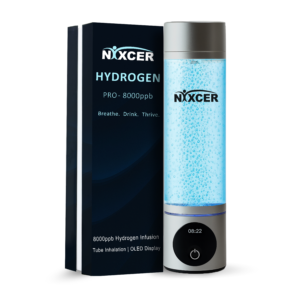
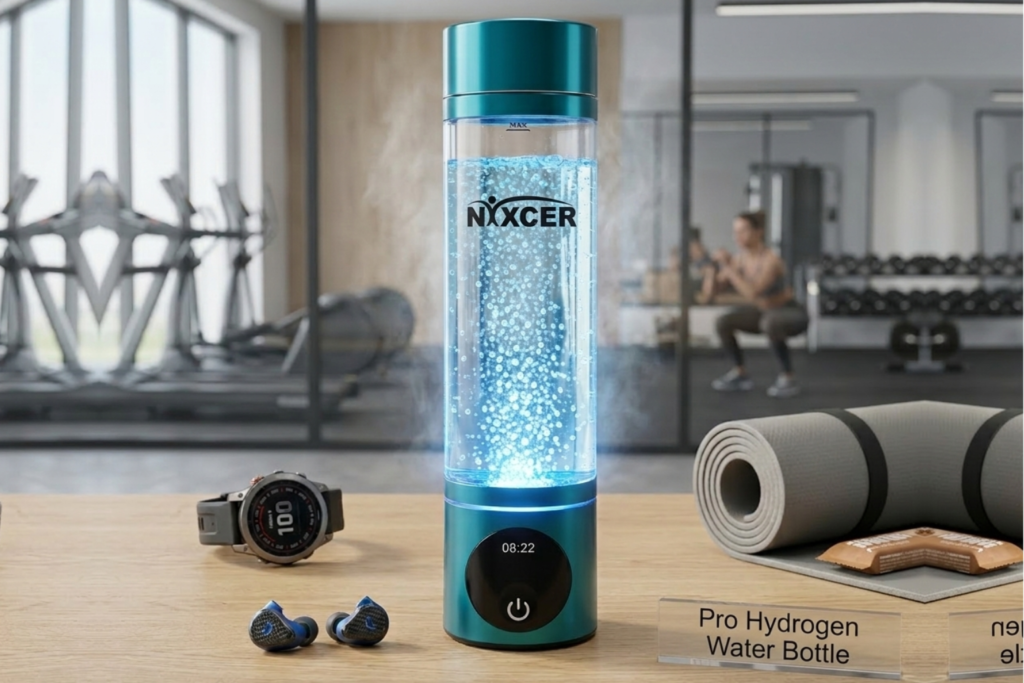
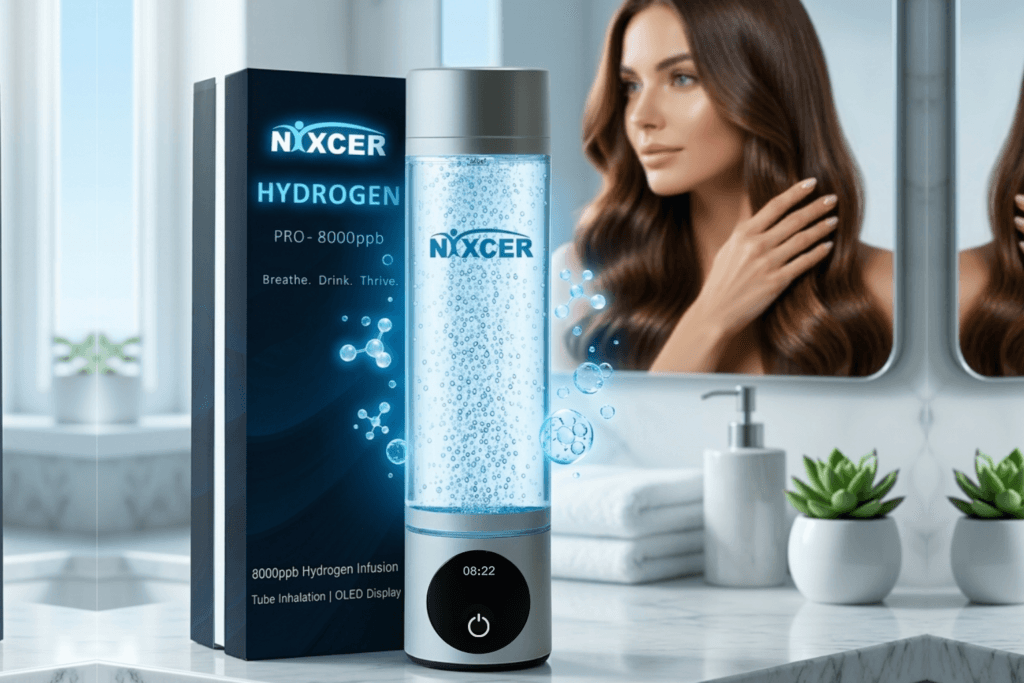
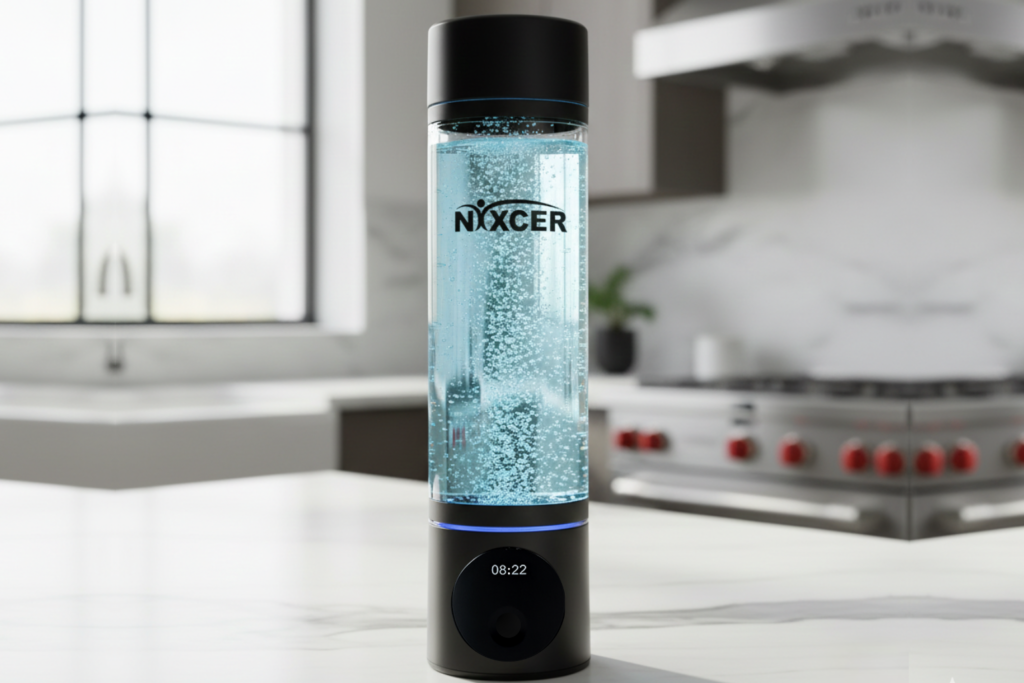
Hydrogen Concentration: Up to 8,000 PPB (8.0 PPM) Battery: 1600mAh, 13 cycles per charge Capacity: 350ml (12 oz) Material: BPA-free Tritan
Key Features and Specifications
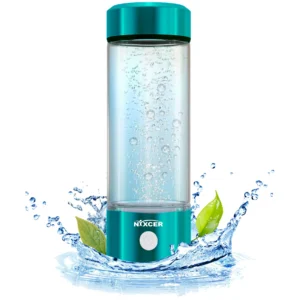
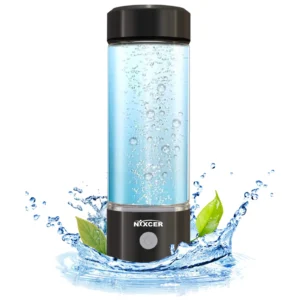
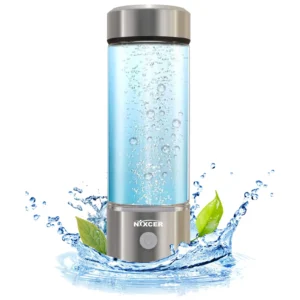
The Nixcer Pro stands out in the budget category with its exceptional 8,000 PPB hydrogen concentration—significantly higher than most competitors under $100. This model uses platinum-coated SPE/PEM dual-chamber technology to ensure pure hydrogen production without harmful byproducts like ozone or chlorine.
The bottle offers dual operational modes: a quick 5-minute cycle delivering 4,000 PPB for everyday use, and an extended 10-minute deep cycle for maximum 8,000 PPB concentration. This flexibility lets you balance time constraints with desired hydrogen intensity. The 1600mAh battery provides 13 cycles per charge, competitive with bottles costing twice as much.
A unique feature is the optional nasal inhalation tube, allowing users to experience hydrogen therapy through inhalation in addition to drinking. While research on hydrogen inhalation is still emerging, this dual functionality adds value for wellness enthusiasts interested in exploring multiple delivery methods. The LED display provides visual feedback during generation cycles, and the 360-degree leak-proof lid ensures safe transport.
Why It Stands Out
The Nixcer Pro delivers premium-level hydrogen concentrations at a budget-friendly price. At under $90 (and sometimes under $70 on Amazon), it represents exceptional value for the PPB output. The platinum-coated electrodes ensure longevity and consistent performance, while CE and RoHS certifications confirm safety standards.
Real user reviews consistently praise the bottle’s build quality, reliable hydrogen generation, and noticeable effects on energy and recovery. The simple one-button operation makes it accessible for beginners, while the dual-mode functionality satisfies more experienced users who want control over concentration levels.
Ideal For
The Nixcer Pro is perfect for budget-conscious buyers who don’t want to compromise on hydrogen concentration. It’s excellent for athletes seeking post-workout recovery support, wellness enthusiasts exploring hydrogen water benefits for the first time, and anyone wanting reliable daily access to high-concentration hydrogen water without premium pricing. The durable Tritan construction makes it particularly suitable for active lifestyles, gym use, and travel.
The IonBottles Original appeals to users who prefer glass construction for the purest taste. Borosilicate glass is non-reactive, ensuring your water tastes clean and fresh with no plastic odors. The slightly larger 14 oz capacity provides more water per cycle compared to smaller competitors.
The hydrogen concentration range of 1,400-2,500 PPB sits comfortably within the research-backed optimal range for health benefits. The glass construction does add weight and requires careful handling, making it better suited for home or office use rather than gym bags or travel. Users consistently praise the clean taste and premium feel, though portability and fragility remain considerations.
MOVOCA Upgrade
Price: ~$75 Hydrogen Concentration: Up to 6,400 PPB Material: Food-grade PC Capacity: 7 oz (200 ml)
The MOVOCA Upgrade packs impressive hydrogen generation into a compact package. With concentrations reaching 6,400 PPB in deep-cycle mode and approximately 3,200 PPB in rapid mode (5 minutes), it provides flexibility for different use cases. The 2200 mAh battery supports multiple cycles per charge, and the smart LED display shows hydrogen production progress.
The smaller 7 oz capacity makes this bottle ultra-portable, perfect for travel or keeping in a purse or small bag. The food-grade PC (polycarbonate) material is both lightweight and durable. While the smaller capacity means more frequent refills for heavy water drinkers, the concentrated hydrogen output and portability make it ideal for on-the-go hydrogen water access.
ZIHUOFAN Budget Pick
Price: ~$60 Hydrogen Concentration: Up to 1,600 PPB Material: Borosilicate glass Capacity: 420ml (14 oz)
For truly budget-conscious buyers, the ZIHUOFAN offers solid performance at an entry-level price point. The 1,600 PPB output hits the sweet spot identified in research as optimal for health benefits. The larger 420ml capacity means fewer refills, though generation time extends to approximately 10 minutes per cycle.
The borosilicate glass construction ensures taste neutrality and safety, while the SPE and PEM technology provide reliable electrolysis without harmful byproducts. This bottle works with purified, tap, and distilled water without producing chlorine thanks to its upgraded ion membrane. While it lacks some premium features like self-cleaning modes or dual-speed options, it delivers on the core promise: consistent hydrogen-rich water at an affordable price.
Comparison Table
Model
Price
H₂ Concentration
Battery Life
Capacity
Material
Best For
Nixcer Pro
$89.99
8,000 PPB
13 cycles
350ml
Tritan
Highest concentration, dual mode
IonBottles Original
~$90
2,500 PPB
10-12 cycles
414ml
Glass
Pure taste, home use
MOVOCA Upgrade
~$75
6,400 PPB
12-15 cycles
200ml
PC
Ultra-portable, travel
ZIHUOFAN
~$60
1,600 PPB
10 cycles
420ml
Glass
Budget entry point
Price vs. Performance Analysis
When evaluating budget hydrogen water bottles, the relationship between price and performance isn’t always linear. The Nixcer Pro, despite being at the higher end of the under-$100 range, offers the best price-per-PPB ratio. Its 8,000 PPB capacity costs approximately $0.011 per PPB, while lower-priced options with 1,600 PPB output cost around $0.038 per PPB.
However, higher PPB isn’t the only consideration. The ZIHUOFAN’s 1,600 PPB concentration aligns perfectly with research-backed optimal levels and comes in a larger capacity with glass construction at $60. For users prioritizing taste purity and adequate concentration over maximum PPB, this represents excellent value.
Material preference also influences value perception. Glass bottles appeal to those avoiding plastics entirely, while Tritan bottles offer practical advantages for active lifestyles. Consider your priorities: if maximum hydrogen concentration matters most, the Nixcer Pro delivers unmatched value. If you want reliable performance at the absolute lowest price, the ZIHUOFAN succeeds. For balanced features and portability, the MOVOCA hits a sweet spot.
Budget vs. Premium: What You’re Actually Paying For
Essential Features in All Price Ranges
Fortunately, essential hydrogen water bottle functionality exists across all price points. Budget bottles under $100 now include the same SPE/PEM electrolysis technology found in premium models. This core technology determines hydrogen generation quality, and affordable options produce concentrations sufficient for health benefits (1,000-1,600+ PPB).
All reliable bottles, regardless of price, feature rechargeable batteries, typically ranging from 1,200-2,000 mAh. Basic safety features like automatic shutoff, overheat protection, and BPA-free materials are standard even in budget models. Most include USB charging (though premium models more often feature USB-C), and one-button operation is universal. In terms of core functionality—generating hydrogen-rich water safely and conveniently—budget bottles perform admirably.
Premium Features Worth the Upgrade
Premium bottles priced above $100 typically offer refinements rather than fundamentally different capabilities. Enhanced battery life (15-25 cycles per charge vs. 10-13 cycles) appeals to heavy users or frequent travelers. Larger capacities (16-20 oz vs. 10-14 oz) mean fewer refills, though this requires more powerful batteries and electrodes.
Premium models often include advanced filtration systems that remove impurities before electrolysis, allowing safe use of any water source. Self-cleaning modes automate maintenance, running extended cycles that prevent electrode mineral buildup. Some high-end bottles feature dual-chamber systems that produce hydrogen and alkaline water simultaneously, appealing to users who want both benefits.
Build quality differences also emerge at higher price points. Premium bottles use thicker borosilicate glass, machined aluminum bodies, or aerospace-grade materials for exceptional durability. Warranty coverage extends from 12 months (typical for budget) to lifetime warranties on premium models. Finally, customer support responsiveness and replacement part availability tend to improve with price.
Where Budget Bottles Excel
Budget bottles shine in several areas. They provide an affordable entry point for hydrogen water curiosity without significant financial risk. If you’re unsure whether hydrogen water fits your lifestyle, spending $60-90 makes more sense than committing $200+ upfront. Budget bottles also work perfectly well as secondary bottles—keeping one at home and another at the gym, for example.
For most users, the health benefits plateau at moderate hydrogen concentrations (1,000-1,600 PPB). Budget bottles consistently achieve these levels, meaning you’re not sacrificing effectiveness by choosing affordable options. The simpler feature sets of budget bottles can actually be advantageous—fewer modes and options mean less complexity and fewer potential failure points. Straightforward, reliable performance often trumps feature-packed devices that complicate basic use.
Complete Buying Guide: How to Choose the Right Bottle
Assessing Your Needs
Start by examining your lifestyle and hydration patterns. Do you primarily drink water at home, or do you need portability for work, gym, or travel? Home-focused users might prioritize larger capacity and taste purity (glass construction), while active individuals benefit from lightweight, durable options (Tritan plastic) with secure lids.
Consider your hydrogen water goals. Athletes targeting post-workout recovery might want higher concentrations and quick generation times. General wellness users seeking daily antioxidant support will find moderate concentrations (1,000-1,600 PPB) perfectly adequate. First-time users should consider budget-friendly entry models, while those replacing a previous bottle might want upgraded features based on prior experience.
Evaluating Product Claims
Approach marketing claims critically. Ultra-high hydrogen concentrations (10,000+ PPB) sound impressive but often dissipate quickly or represent peak instantaneous levels rather than sustained concentrations. Look for bottles with third-party laboratory testing from organizations like H2 Analytics or H2Hubb. Certificates should specify testing methodology and sustained concentration measurements, not just maximum achievable output.
Be skeptical of exaggerated health claims. No hydrogen water bottle can “cure” diseases, eliminate aging, or replace medical treatment. Reputable brands frame benefits carefully, citing research and using language like “may support” or “research suggests” rather than making definitive promises. Check whether claimed benefits align with published scientific literature rather than relying solely on testimonials.
Reading Reviews Effectively
Online reviews provide valuable insights but require discernment. Look for patterns across multiple reviews rather than individual extreme opinions. Reviews mentioning specific use cases (athletic recovery, energy levels, taste) offer more value than generic praise. Pay attention to comments about durability, battery longevity, and customer service experiences, as these indicate long-term satisfaction.
Be aware of incentivized reviews. Many companies offer discounts in exchange for reviews, which can skew feedback positively. Reviews purchased over several months from verified buyers tend to be more reliable than clusters of reviews appearing immediately after product launch. Technical reviews from hydrogen water enthusiasts or testing sites provide objective data on actual hydrogen output and performance.
Warranty and Customer Support
Quality budget bottles should include at least a 12-month warranty covering manufacturing defects and component failures. Read warranty terms carefully—some cover only the electronic base unit while excluding the bottle itself, filters, or wear items. Understand the claims process: does warranty service require returning the entire product, or can the company send replacement parts?
Research customer support responsiveness before purchasing. Check whether the company provides email support, phone support, or only contact forms. Response time matters—companies that reply within 24-48 hours demonstrate commitment to customer satisfaction. Look for brands that stock replacement parts (electrodes, charging cables, seals) and make them available for purchase, ensuring you can maintain your bottle long-term.
Maximizing Your Hydrogen Water Bottle Investment
Best Water Types to Use
Water quality significantly impacts hydrogen generation efficiency and bottle longevity. Filtered or purified water provides optimal results, producing consistent hydrogen concentrations without mineral interference. Use a basic carbon filter pitcher or your refrigerator’s water filtration system for excellent source water.
Distilled water works well for hydrogen generation and prevents mineral buildup on electrodes, extending maintenance intervals. However, distilled water lacks minerals that contribute to taste, so some users find it bland. Spring water with moderate mineral content offers a good compromise—enough minerals for pleasant taste without excessive buildup. Avoid heavily mineralized or hard water, as calcium and magnesium deposits accumulate quickly on electrodes, reducing efficiency and requiring frequent cleaning.
Tap water works in most bottles equipped with upgraded SPE/PEM systems, but quality varies by location. If your tap water has strong chlorine odors, metallic tastes, or visible sediment, consider filtration before use. Many municipalities provide water quality reports online, helping you assess whether additional filtration is worthwhile.
Optimal Usage Patterns
Hydrogen concentration peaks immediately after generation, then gradually declines as hydrogen gas escapes. For maximum benefits, drink your hydrogen water within 2-3 minutes of completing the generation cycle. Some users prefer running cycles as needed rather than generating water in advance.
Consistency matters more than quantity. Regular daily consumption (1-3 bottles per day) provides more consistent antioxidant support than sporadic large amounts. Many users establish routines: one serving first thing in the morning, another post-workout, and a third in the evening. This pattern maintains steady hydrogen exposure throughout the day.
Don’t overestimate your needs initially. Start with one bottle daily for 2-3 weeks, observing how you feel before increasing consumption. Some users experience mild digestive changes as their system adjusts to hydrogen-rich water. Gradual introduction allows your body to adapt comfortably.
Maintenance and Cleaning
Proper maintenance extends bottle life and ensures optimal performance. Rinse your bottle after each use with clean water, even if you plan to refill immediately. This quick rinse prevents residue accumulation. Weekly, perform deeper cleaning by disassembling removable components (electrodes, caps, seals) and washing with mild dish soap and warm water.
For electrode maintenance, create a descaling solution using equal parts white vinegar and water. Soak the electrode assembly for 10-15 minutes monthly, then rinse thoroughly. This gentle acid treatment dissolves mineral deposits without damaging platinum or titanium coatings. Never use abrasive scrubbers or harsh chemicals on electrodes, as these can damage the coating and reduce hydrogen generation efficiency.
Some bottles include self-cleaning modes that run extended electrolysis cycles to prevent buildup. Use these features weekly if available. Between deep cleanings, inspect electrodes visually for white or brown mineral deposits. If generation cycles seem slower or hydrogen output appears reduced, additional cleaning is needed.
Battery Care Tips
Lithium-ion batteries in hydrogen water bottles last longer with proper care. Avoid complete discharges—recharge when battery life drops to 20-30% rather than waiting for full depletion. Complete discharge cycles stress batteries and reduce overall lifespan. Charge fully after each use if possible, though modern batteries don’t suffer from “memory effect” like older technologies.
Store your bottle with 50-70% charge if not using for extended periods (weeks or months). Fully charged or fully depleted states accelerate battery degradation during storage. Keep the bottle at room temperature—extreme heat or cold damages battery chemistry and reduces capacity over time.
Common Mistakes to Avoid When Buying Budget Hydrogen Water Bottles
Falling for Unrealistic PPB Claims: Be skeptical of bottles advertising 15,000+ PPB concentrations. While technically achievable instantaneously, these levels don’t sustain during actual use. Research-backed optimal concentrations range from 500-1,600 PPB, and reputable brands target this range rather than chasing inflated numbers.
Ignoring Material Safety Certifications: Not all plastics are created equal. Bottles without clear BPA-free certifications may leach chemicals into your water. Always verify that plastic bottles use food-grade Tritan, PC, or other certified safe materials. Glass bottles should specify borosilicate rather than standard glass, which can crack from thermal stress.
Overlooking Battery Specifications: A bottle with impressive hydrogen output but poor battery life becomes frustrating quickly. Verify battery capacity (aim for 1,600+ mAh) and cycles per charge (10+ minimum). Consider your usage patterns—if you want multiple daily servings or plan to travel, prioritize longer battery life.
Skipping Warranty Coverage: Budget doesn’t mean disposable. Quality manufacturers stand behind their products with minimum 12-month warranties. Lack of warranty or unclear return policies signals potential quality concerns. Verify warranty terms before purchasing, ensuring coverage includes the most expensive component—the electronic base with electrodes.
Choosing Based Solely on Price: The cheapest option isn’t always the best value. A $40 bottle that fails after three months costs more long-term than a $70 bottle lasting two years. Evaluate total cost of ownership, including replacement parts, filters, and potential early replacement due to failure.
Ignoring User Reviews: Manufacturer descriptions highlight strengths while downplaying weaknesses. User reviews reveal real-world performance, durability issues, and customer service quality. Spend time reading reviews from verified purchases, particularly those mentioning long-term use (6+ months).
Frequently Asked Questions
Is 1000 PPB enough for health benefits?
Yes, 1,000 PPB (1.0 PPM) of molecular hydrogen aligns with concentrations used in many research studies showing positive health effects. Studies demonstrating antioxidant benefits, improved athletic recovery, and reduced oxidative stress typically used hydrogen water in the 500-1,600 PPB range. Higher concentrations don’t necessarily provide greater benefits, as your body can only utilize a certain amount of hydrogen. Consistent daily consumption at 1,000+ PPB matters more than sporadic exposure to ultra-high concentrations.
Are cheap hydrogen water bottles safe?
Quality budget hydrogen water bottles under $100 can be quite safe when they use proper SPE/PEM technology and food-grade materials. Safety comes from technology and certifications, not just price. Look for bottles with CE, RoHS, or FDA certifications confirming material safety. Avoid unbranded bottles from unknown manufacturers lacking clear safety documentation. Established brands like Nixcer Pro, IonBottles, and similar provide safe, budget-friendly options. The key is distinguishing between affordable quality bottles and genuinely cheap, poorly-made products.
How long do budget hydrogen water bottles last?
With proper care, budget hydrogen water bottles typically last 1-2 years of regular use. The electronic components (battery, electrodes) have finite lifespans, regardless of price point. Electrodes gradually degrade through continuous electrolysis, though quality platinum-coated versions last longer. Batteries typically support 300-500 full charge cycles before capacity diminishes noticeably. Many bottles allow electrode replacement, extending overall life beyond initial components. Proper maintenance—regular cleaning, avoiding hard water, proper battery care—significantly extends functional lifespan.
Can I use tap water in my hydrogen water bottle?
Most modern hydrogen water bottles with SPE/PEM technology can handle tap water safely, though performance and maintenance requirements vary by water quality. Tap water with high mineral content (hard water) accelerates electrode buildup, requiring more frequent cleaning. Chlorinated tap water doesn’t pose problems for quality bottles—the SPE/PEM membrane prevents chlorine from entering the drinking chamber. However, filtered or purified water produces more consistent hydrogen concentrations and extends maintenance intervals. If your tap water has strong odors, tastes, or visible sediment, filtration before use is recommended.
What’s the difference between PPB and PPM?
PPB (parts per billion) and PPM (parts per million) measure hydrogen concentration in water. The conversion is straightforward: 1 PPM equals 1,000 PPB. Both units measure the same thing—the ratio of hydrogen molecules to water molecules. Manufacturers use either term, sometimes inconsistently. For example, 1,500 PPB equals 1.5 PPM, and 3,000 PPB equals 3.0 PPM. When comparing bottles, convert all measurements to the same unit to ensure accurate comparison. Most research and technical specifications use PPM, while marketing materials often use PPB because larger numbers sound more impressive.
Do higher PPB levels mean better results?
Not necessarily. Research suggests optimal hydrogen concentrations for health benefits range from 500-1,600 PPB. Higher concentrations don’t proportionally increase benefits because your body can only absorb and utilize a certain amount of hydrogen. Excess hydrogen dissipates harmlessly or is exhaled. Some studies actually used lower concentrations (800-1,000 PPB) and still showed significant results. Consistency matters more than peak concentration—regular daily consumption at moderate levels typically provides better results than sporadic exposure to ultra-high concentrations. Very high PPB claims (10,000+) may also dissipate quickly, meaning sustained concentration remains lower.
How often should I clean my hydrogen water bottle?
Quick rinse after each use prevents immediate residue buildup. Weekly, perform basic cleaning with dish soap and warm water, disassembling all removable parts. Monthly deep cleaning depends on water quality—if using tap water or noticing mineral deposits, perform descaling with diluted vinegar solution. If using filtered or distilled water, quarterly deep cleaning may suffice. Bottles with self-cleaning modes should run these cycles weekly. Visual inspection guides cleaning frequency: white or brown deposits on electrodes indicate cleaning is needed. Reduced hydrogen output or slower cycle times also signal maintenance requirements.
Are budget bottles as effective as premium ones?
For core hydrogen generation, quality budget bottles perform comparably to premium models. Both use SPE/PEM electrolysis technology and achieve adequate hydrogen concentrations for health benefits. Premium bottles offer refinements—longer battery life, larger capacity, better materials, advanced filtration—but don’t fundamentally generate hydrogen better. Research-backed optimal concentrations (1,000-1,600 PPB) are achievable at all price points. Premium bottles provide convenience and longevity advantages rather than superior hydrogen production. For most users, budget bottles deliver the same health benefits, making premium models a luxury rather than a necessity.
Final Verdict: Are Budget Hydrogen Water Bottles Worth It?
Budget-friendly hydrogen water bottles under $100 represent excellent value for most consumers. The technology has matured to the point where affordable options deliver reliable performance, adequate hydrogen concentrations, and genuine health benefits. You don’t need to spend $200+ to access the antioxidant properties and potential recovery benefits of hydrogen-rich water.
The Nixcer Pro stands out as the best overall budget option, offering exceptional 8,000 PPB concentration, dual operational modes, and reliable battery life at under $90. For those prioritizing taste purity and larger capacity, the IonBottles Original or ZIHUOFAN provide glass construction and adequate hydrogen output. Ultra-portable needs are met by the MOVOCA Upgrade, combining compact size with impressive concentration.
The key to success with budget bottles lies in setting realistic expectations and maintaining proper care. These devices work best as one component of a healthy lifestyle rather than a standalone solution. With consistent daily use, proper water quality, and regular maintenance, budget hydrogen water bottles deliver tangible benefits at accessible price points.
Whether you’re an athlete seeking recovery support, a wellness enthusiast exploring antioxidant hydration, or simply curious about hydrogen water, budget-friendly options provide an affordable entry point. The best budget hydrogen water bottle for you depends on your specific needs, usage patterns, and priorities—but excellent options exist across the entire under-$100 range.