
Why Filtered Water Is Better For You Than You Think
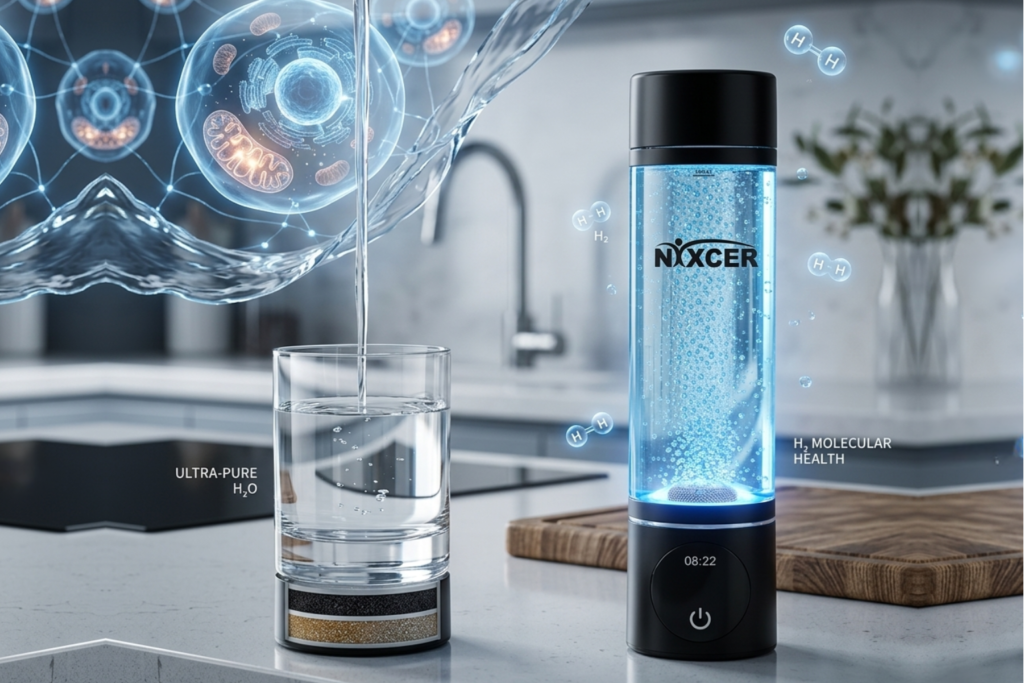
You turn on the tap, fill a glass, and drink. It looks clear. It tastes fine. But is it really giving your body what it needs? The answer might surprise you. Most people assume their tap water is perfectly safe simply because it meets government standards. And while that is technically true, “safe” and “optimal” are two very different things. Today, science shows that what you drink — and the quality of that water — directly impacts your energy, focus, skin, digestion, inflammation levels, and long-term health. In this guide, we break down exactly why filtered water is better for you than you might think, what your tap water likely contains that you don’t know about, and why the Nixcer Pro Hydrogen Water Bottle takes everyday hydration to a completely different level. What Is Really in Your Tap Water? Before understanding why filtered water is better, it helps to understand what standard tap water actually contains. Municipalities treat water to meet legal safety thresholds — but that process does not eliminate everything. Chlorine and Chloramine Chlorine is added to kill bacteria and pathogens during water treatment — which is a good thing. But by the time it reaches your glass, residual chlorine and its byproducts remain. These compounds give tap water its familiar chemical taste and odor, and research suggests chronic low-level exposure may affect gut microbiome health over time. Lead and Heavy Metals Older homes and buildings with aging pipes can leach lead directly into water between the treatment plant and your faucet. Even small amounts of lead accumulate in the body and are linked to cognitive impairment, kidney damage, and developmental issues in children. A Harvard University analysis found that stronger rules on lead and copper in water could generate roughly $9 billion in annual health benefits. PFAS — The “Forever Chemicals” PFAS (per- and polyfluoroalkyl substances) are synthetic chemicals that do not break down naturally. An estimated 200 million Americans have PFAS in their drinking water according to water quality researchers. These compounds are linked to cancer, hormonal disruption, immune suppression, and thyroid disease. The EPA is still in the process of setting enforceable limits — meaning they are almost certainly in your water right now without any regulatory action protecting you. Microplastics Studies have found microplastics in 94% of US tap water samples. A 2025 study found measurable microplastics in human brain tissue. A 2024 study linked microplastics in arterial walls to a doubling of heart attack and stroke risk. While research is still evolving, growing evidence suggests reducing microplastic intake is a sensible precaution. “Safe” tap water meets legal minimums — it does not mean your water is free of chlorine residues, PFAS, heavy metals, or microplastics that may accumulate in your body over years of daily exposure. 7 Proven Benefits of Drinking Filtered Water 1. Removes Harmful Contaminants Quality filtration systems — from carbon block filters to reverse osmosis — effectively remove chlorine, lead, PFAS, pesticides, sediment, and microplastics from drinking water. The result is water that does not just meet safety minimums but is genuinely clean at a molecular level. 2. Better Taste Means You Drink More Chlorine removal is one of the most immediate and noticeable benefits of filtration. When water tastes fresh and neutral, you naturally drink more of it. And since a large share of adults are chronically mildly dehydrated without realizing it, this alone can improve your energy, concentration, and digestion significantly. 3. Supports Digestive Health Chlorine in tap water does not discriminate — it can disrupt the balance of beneficial bacteria in your gut just as it kills pathogens in treatment plants. Filtered water free of chlorine and chemical residues creates a healthier internal environment for your microbiome, supporting better digestion, nutrient absorption, and immune function. 4. Protects Skin, Hair, and Nails Hard water minerals and chlorine can strip the skin of its natural oils, contributing to dryness, irritation, and accelerated aging. People who switch to filtered water frequently report improvements in skin hydration and hair texture within weeks. 5. Reduces Inflammation Chronic low-level exposure to contaminants like heavy metals, PFAS, and chlorinated byproducts has been linked to systemic inflammation — a root driver of cardiovascular disease, diabetes, and autoimmune conditions. Removing these triggers from your daily water intake reduces your body’s inflammatory burden over time. 6. Safer for Children and Vulnerable Groups Children, pregnant women, the elderly, and people with compromised immune systems face greater risks from water contaminants. Filtered water is especially important for these groups, reducing exposure to lead (which affects developing brains), PFAS (which can cross the placenta), and microbial traces. 7. Better Value Than Bottled Water People who rely on bottled water for quality are actually getting a worse deal in multiple ways. Bottled water is largely unregulated compared to tap water, often comes from municipal sources anyway, and research shows bottled water drinkers may ingest far more microplastics annually than those who drink filtered tap water — because plastic leaches directly into the water from the bottle itself. Filtered Water Is Good — But Hydrogen-Rich Water Is the Next Level Filtering your water removes what should not be there. Hydrogen-enriched water adds something remarkable: dissolved molecular hydrogen (H₂), the smallest and most bioavailable antioxidant molecule known to science. This is where standard filtered water and the Nixcer Pro Hydrogen Water Bottle tell a completely different story. What Is Hydrogen Water? Hydrogen water is filtered water that has been infused with pure molecular hydrogen gas (H₂) under electrolysis. The hydrogen molecules are so small that they can penetrate cell membranes and mitochondria directly — neutralizing the most damaging free radicals at a cellular level where conventional antioxidants cannot reach. Molecular hydrogen maintains a neutral pH, meaning it offers antioxidant benefits without altering the natural chemistry of your water — unlike alkaline ionized water. What Does the Science Say? Research into hydrogen water has grown substantially, with over 1,800 peer-reviewed studies published globally. A 2024 systematic review published in the International Journal of