
Do Water Filters Remove Bacteria? The Complete Guide
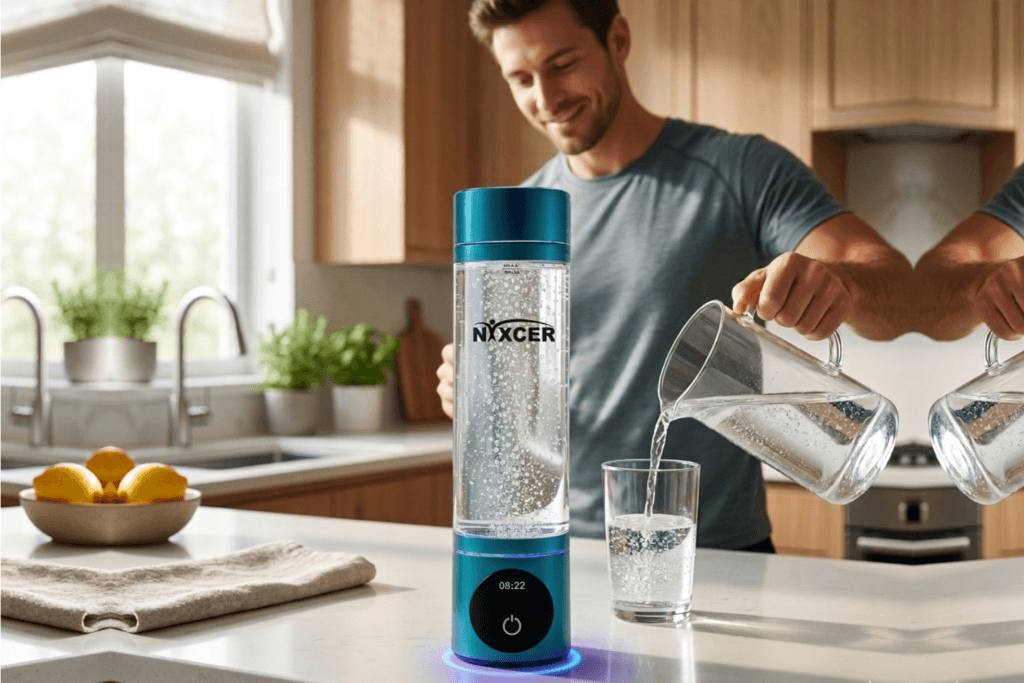
Yes — but only certain types of water filters remove bacteria. Reverse osmosis (RO), ultrafiltration (UF), and UV purifiers are the most effective at removing or killing bacteria. Standard carbon filters and most pitcher filters do NOT reliably remove bacteria. Once your water is clean and bacteria-free, upgrading to a hydrogen water generator bottle like the Nixcer Pro adds powerful antioxidant benefits to every sip. What Is Bacteria in Water? Bacteria are microscopic, single-celled organisms found almost everywhere in nature — including water. Most bacteria in water are harmless or even beneficial. But some species, called pathogens, can make you seriously sick. The most common harmful bacteria found in drinking water include: According to the CDC, approximately 7.2 million Americans suffer from waterborne illnesses annually. While municipal water treatment handles most of this risk, private wells and aging infrastructure can still allow bacteria to reach your tap. Do Water Filters Remove Bacteria? (Direct Answer) Yes — some water filters remove bacteria very effectively. But not all filters do. This is the most important thing to understand: the phrase “water filter” covers a huge range of devices with very different capabilities. A basic fridge filter or pitcher filter is designed to improve taste — not eliminate bacteria. A reverse osmosis system or UV purifier, on the other hand, can remove or kill nearly all harmful bacteria. Whether a filter removes bacteria depends on: The bottom line: test your water first, then choose a filter certified for the specific threat in your supply. Types of Water Filters and Their Bacteria Removal Ability Not all filters work the same way. Here’s a clear breakdown of the most common types and how they handle bacteria: 1. Activated Carbon Filters (Most Common) Carbon filters — used in Brita, PUR, Zero Water, and most pitcher filters — work by adsorption. Water passes through porous carbon material, and chemicals, chlorine, and some heavy metals stick to the surface. Bacteria removal: ❌ Generally NOT effective Carbon filters are not designed to trap bacteria. Their pores are too large to physically block bacteria, and they don’t kill them either. In fact, studies have shown that improperly maintained carbon filters can become breeding grounds for bacteria — with some filtered samples containing up to 10,000 times more bacteria than the tap water before filtering (PubMed, 1998). Use carbon filters to: Improve taste, remove chlorine, reduce VOCs, reduce lead. Do NOT rely on them for: Bacteria, viruses, parasites. 2. Reverse Osmosis (RO) Filters Reverse osmosis forces water through a semi-permeable membrane with pores as small as 0.0001 microns. Bacteria typically measure 0.2–2 microns in size — far too large to pass through. Bacteria removal: ✅ Very effective (>99.9%) RO systems can block bacteria like E. coli and Salmonella reliably. They also reduce heavy metals, nitrates, fluoride, arsenic, and dissolved solids. The key limitation: RO doesn’t kill bacteria — it only blocks them. If the membrane is damaged or if bacteria grow inside the system due to poor maintenance, contamination is still possible. Best for: Well water users, households with lead or heavy metal concerns, comprehensive water purification. 3. UV (Ultraviolet) Filters UV filters don’t physically remove bacteria — they destroy them. Water passes through a chamber where UV-C light (at a specific wavelength) disrupts the DNA of bacteria and viruses, preventing them from reproducing. Bacteria removal: ✅ Highly effective (up to 99.99%) UV systems can eliminate nearly all bacteria, viruses, mold, and protozoa. Culligan and SpringWell offer whole-house UV systems certified to NSF Standard 55. The limitation: UV only works on microorganisms — it doesn’t remove chemicals, heavy metals, or sediment. For complete protection, UV is best combined with RO or carbon filtration. Best for: Well water users, households needing biological protection without chemical changes to water. 4. Ultrafiltration (UF) Filters UF systems use hollow fiber membranes with pore sizes between 0.01–0.1 microns — small enough to block bacteria, cysts, and some viruses. Unlike RO, UF retains beneficial minerals in the water. Bacteria removal: ✅ Very effective (>99.9%) UF is increasingly popular because it provides strong biological protection while being easier to install than RO. TAPP Water’s Ultra filter, for example, is certified for 99.95% bacteria removal independently tested in multiple countries. Best for: People who want bacteria protection while keeping mineral content intact. 5. Pitcher Filters (Brita, PUR, zero Water, etc.) Pitcher filters are the most widely used home filtration products. Most use granular activated carbon (GAC). Bacteria removal: ❌ Not effective Brita, PUR, zero Water, and most other standard pitchers make no claim about bacteria removal. They are designed for taste, odor, and chemical reduction only. If your primary concern is bacteria, a pitcher filter is not the right tool. Exception: Some pitchers with hollow fiber membranes (like certain LifeStraw pitcher models) do filter bacteria. Check the label for NSF certification. What Bacteria Do Water Filters NOT Remove? Even the best filtration systems have limits. Important points: If your water source has confirmed bacterial contamination, the CDC recommends boiling as the most universally reliable emergency treatment while you arrange a certified filtration solution. NSF Certifications: What They Mean for Bacteria When shopping for a water filter, look for NSF/ANSI certification. These independent standards confirm what a filter actually removes, not just what marketing claims. NSF Standard What It Covers NSF/ANSI 42 Aesthetic effects — taste, odor, chlorine NSF/ANSI 53 Health effects — lead, cysts, VOCs NSF/ANSI 58 Reverse osmosis systems NSF/ANSI 55 UV systems — bacteria & virus reduction NSF P231 Microbiological purifiers — bacteria, viruses, cysts Pro tip: A filter claiming to “remove bacteria” without an NSF certification number is a marketing claim, not a verified fact. Always check the filter’s NSF certification page at nsf.org before purchasing. Well Water vs. Municipal Water: Different Risks Your water source determines how seriously you need to think about bacteria: Municipal (Tap) Water: Most city water is treated with chlorine and goes through multi-stage processing before reaching your tap. Bacteria rarely make it through in normal conditions. However, aging pipes,